Hemisphere Visibility Principles
Why are some objects invisible from a given location? Why are Chile and Hawaii good places to build observatories? Answering questions like these mainly requires two numbers: your latitude φ (positive in the northern hemisphere) and the object’s declination Dec.
The rule in one sentence
Section titled “The rule in one sentence”Over the course of a day, an object traces a small circle centered on the celestial pole. Whether it rises above the horizon and whether it sets depends only on Dec and φ:
- Will rise (visible): in the northern hemisphere you need
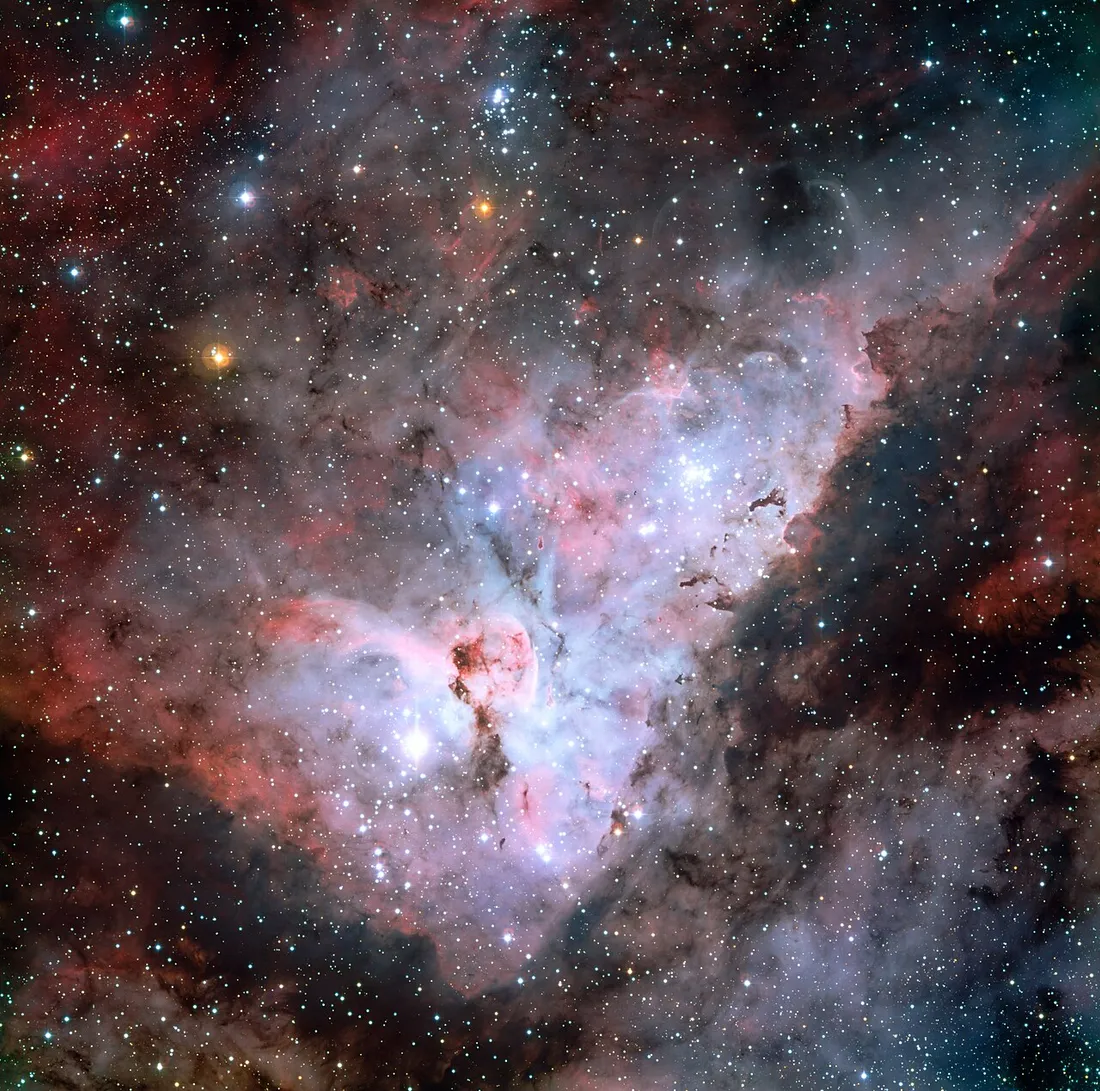
Dec > φ − 90°. Example: at latitude 40° N, you can only see objects withDec > −50°→ the Carina Nebula at declination −59° is never visible. - Stays up all night (circumpolar): objects with
Dec > 90° − φcircle the pole without setting. Example: at 40° N → objects withDec > +50°are circumpolar (around Ursa Major). - Near the equator (φ ≈ 0): in theory the entire sky is visible — this is exactly why low-latitude dark skies are so prized, letting you image both the northern classics and southern-exclusive targets.
The southern hemisphere is perfectly symmetric: just swap the “north celestial pole” for the “south celestial pole” and mirror the direction of the inequalities.
Try it interactively
Section titled “Try it interactively”Drag the slider to set your latitude and see which declinations are circumpolar and which never rise:
- Circumpolar (never sets)
- Rises and sets
- Never rises
Practical conclusions
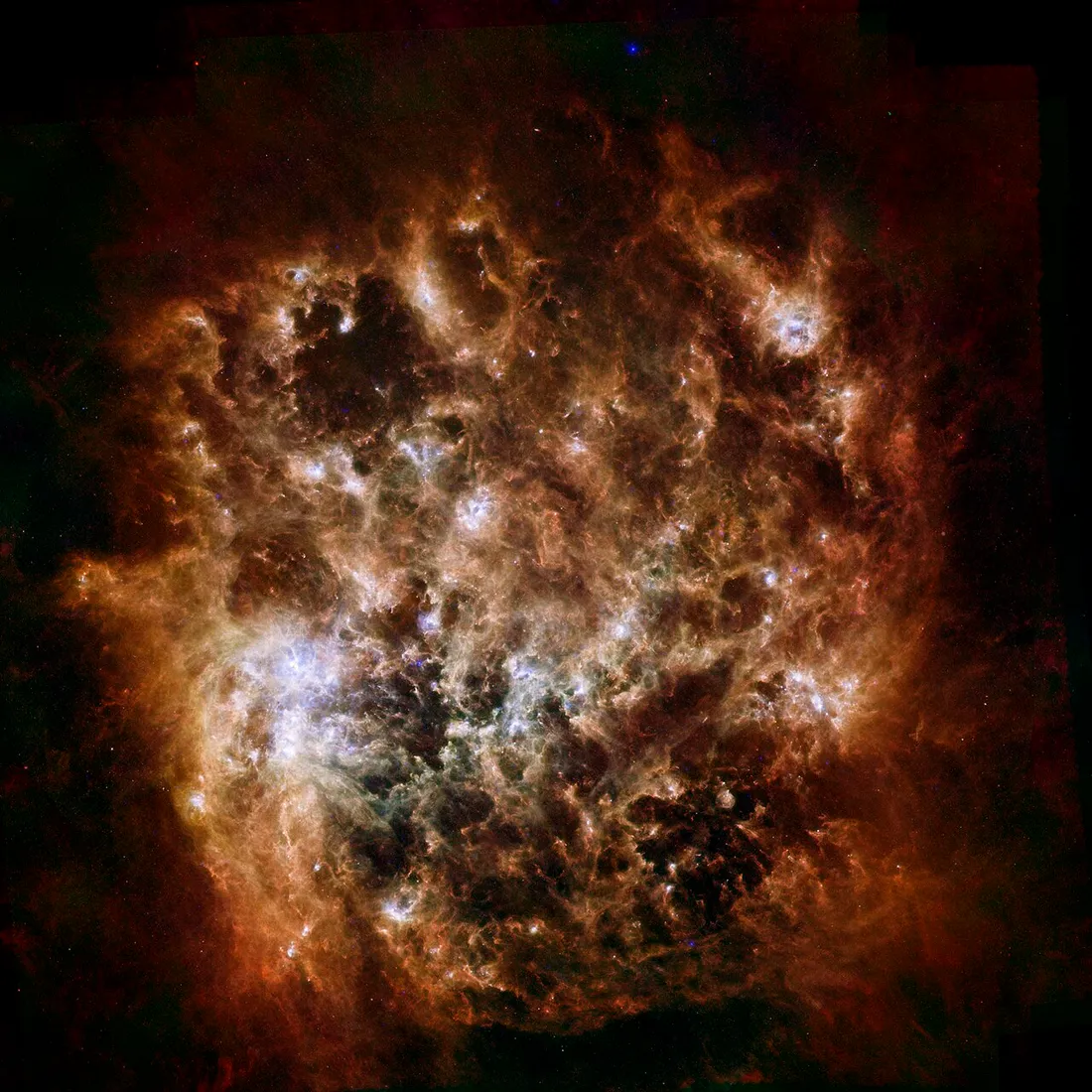
Section titled “Practical conclusions”- Northern-hemisphere observers (most of China, Europe, and North America): targets such as M31, M42, M45, M13, and M51 have good visibility; but the Magellanic Clouds, the Carina Nebula, ω Centauri, and the Southern Cross are essentially invisible.
- Southern-hemisphere observers (or those renting southern remote rigs): can observe southern targets such as the Magellanic Clouds, the Carina Nebula, and ω Centauri, and the galactic center reaches a higher altitude; the trade-off is losing some northern circumpolar objects.
This is also one reason why iTelescope / Telescope Live offer rigs in both hemispheres, and why Chile has become an important observatory site. If you want to image southern targets but live in the northern hemisphere, consider using the southern-hemisphere equipment on a remote platform.
Transit altitude: more than just “can I see it”
Section titled “Transit altitude: more than just “can I see it””Even if an object does rise, its maximum altitude above the horizon at upper transit (crossing the meridian) determines image quality — the lower it is, the more atmosphere you must look through, and the worse the seeing and extinction:
h_max = 90° − |φ − Dec|
Example: from 40° N imaging the Lagoon Nebula at Dec −24°, h_max = 90 − |40 − (−24)| = 26°, hugging the horizon — far inferior to the southern hemisphere. Every object’s detail page has already computed this altitude for you for Beijing (40°N) and Chile (30°S) — see 〔Object Catalog〕.
Further reading
Section titled “Further reading”- Unsure about right ascension and declination? Start with 〔The Celestial Sphere and Coordinate Systems〕.
- Why do site surveys favor low latitude plus high altitude? See 〔Famous Observatories〕 and 〔Atmosphere and Observing Conditions〕.