Getting Started
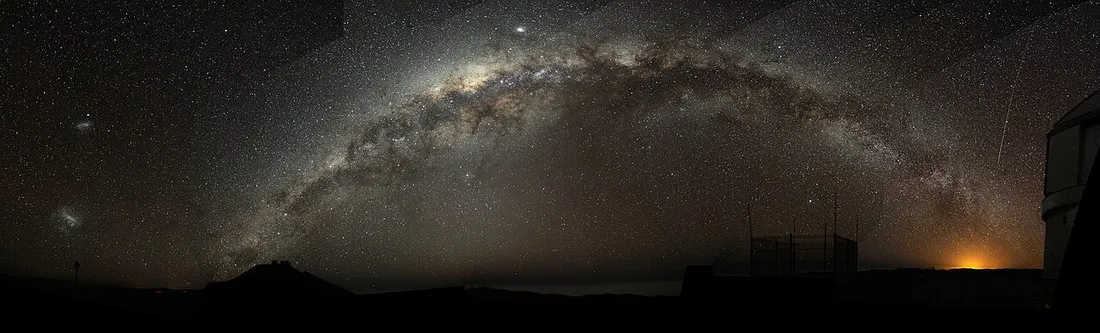
This site is aimed at readers of Chinese and compiles the foundational concepts, common workflows, and reference indexes for astronomical observation and astrophotography. You don’t need to read through the table of contents in order; you can pick an entry point based on your goal first, then fill in the related concepts.
Content Organization
Section titled “Content Organization”The site is divided into two topic areas and one index area:
- Astronomy: coordinates and time, the Solar System, stars and deep-sky objects, cosmology, observing conditions, and observation planning.
- Astrophotography: optics and exposure, sensors, capture control, calibration frames, stacking, post-processing workflows, and remote imaging platforms.
- Reference: glossary, object catalogs, observatories, software, learning paths, and external resources.
Where to Start
Section titled “Where to Start”Choose an entry point based on your current goal:
Three Categories of Entry Points
Section titled “Three Categories of Entry Points”Astronomy
Section titled “Astronomy”The foundations cover celestial coordinates, time systems, and magnitude. After that you can read about the Solar System, stellar physics, deep-sky objects, and a cosmology overview. Before heading out to observe, it is recommended that you first check the observing conditions and observation planning.
Astrophotography
Section titled “Astrophotography”The photography section begins with optics, exposure, sensors, and signal-to-noise ratio, then moves on to wide-angle, deep-sky, planetary, and narrowband imaging. The data processing section covers calibration frames and the post-processing workflow.
Reference
Section titled “Reference”| Index | Purpose |
|---|---|
| Object catalog | Look up a target’s coordinates, season, and recommended focal length by number |
| Glossary | Quickly look up any term you don’t understand |
| Observatories | Reference for famous sites and remote setups |
| Software | Tools for planning, capture, stacking, and post-processing |
| Learning paths | Systematic, progressive routes |
| Resources | Quality books, websites, and communities |