C106 · 47 Tucanae
| Chinese name | 杜鹃座47 |
|---|---|
| Type | Globular cluster |
| Constellation | Tuc |
| RA | 00h24m |
| Dec | −72° |
| Apparent magnitude | 4.1ᵐ |
| Hemisphere | Southern |
| Best season | Autumn |
| Difficulty | Easy |
| Focal length | 中长焦 800–1200mm |
About
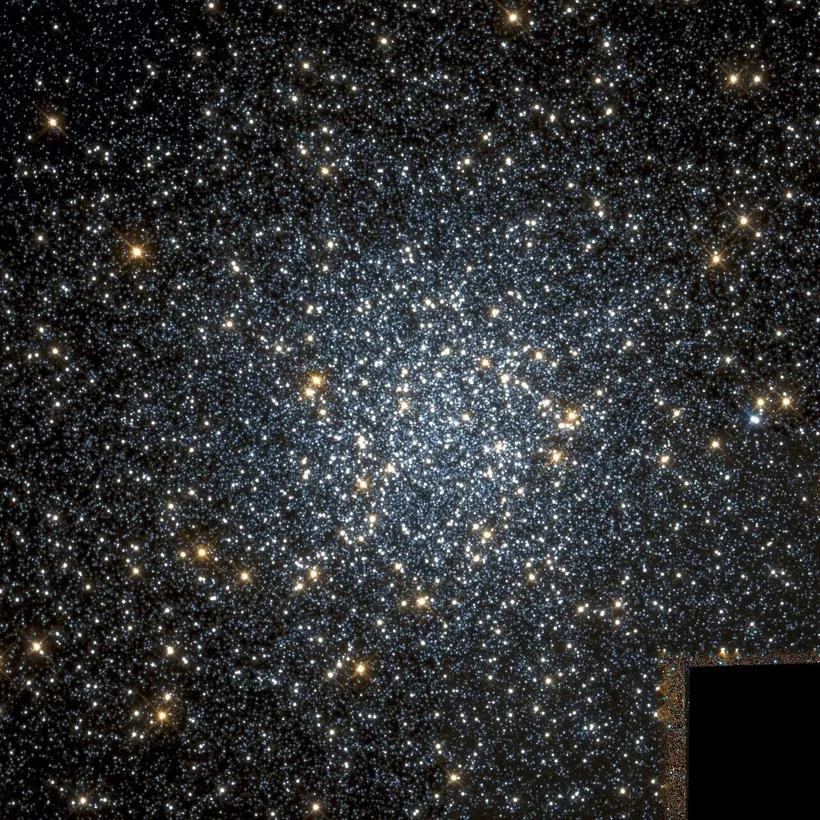
47 Tucanae (C106, NGC 104) lies about 13,000 light-years away and is the second-brightest globular cluster in the entire sky after Omega Centauri, visible to the naked eye as a bright star-like glow. It contains millions of stars and an extremely dense core where stellar density climbs steeply toward the center, glowing an overall warm gold. The cluster hosts many millisecond pulsars and a possible intermediate-mass black hole, making it a key laboratory for stellar dynamics. It sits near the Small Magellanic Cloud on the sky, the two often framed together in southern wide-field deep-sky shots, a complementary jewel of southern-hemisphere imaging. Long focal lengths resolve a breathtakingly dense sea of stars.