NGC6979 · Pickering's Triangle
| Chinese name | 皮克林三角 |
|---|---|
| Type | Supernova remnant |
| Constellation | Cyg |
| RA | 20h50m |
| Dec | +32° |
| Apparent magnitude | 7ᵐ |
| Hemisphere | Northern |
| Best season | Summer |
| Difficulty | Moderate |
| Focal length | 中焦 400–800mm |
About
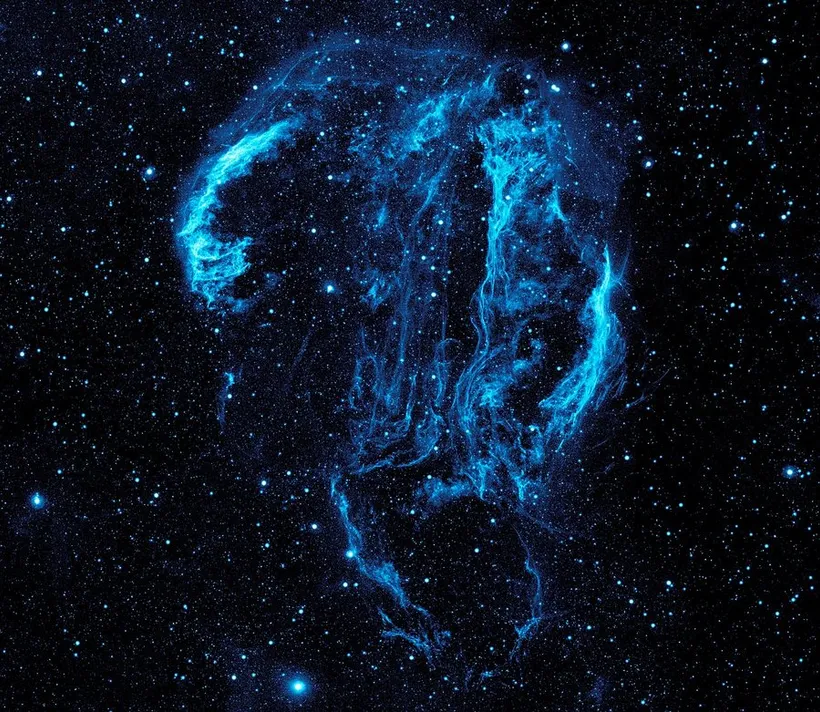
Pickering's Triangle is a fainter triangular patch of filaments north of center in the Cygnus Loop supernova remnant, lying about 2,400 light-years away in Cygnus. It is named for Harvard Observatory director Edward Pickering, though it was actually discovered on photographic plates by his assistant Williamina Fleming. It bridges the Eastern and Western Veil and shares their origin in a massive star that exploded over 10,000 years ago, showing delicate red hydrogen and cyan oxygen shock filaments. With the lowest surface brightness of the three Veil sections, it is an essential middle piece when imaging the whole Cygnus Loop wide-field. It suits a medium focal length with narrowband filters and long exposures under dark skies to reveal its fine filamentary structure.